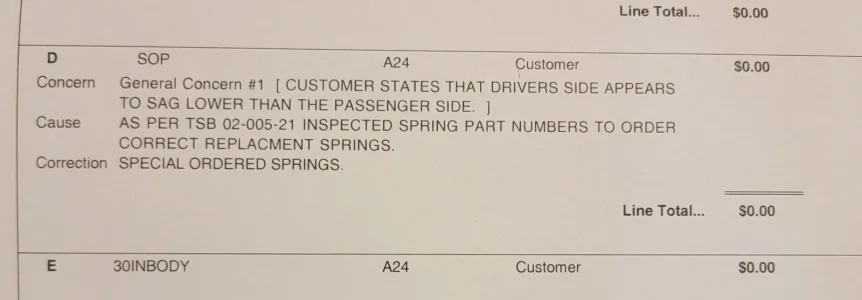
Shedding some light as to “why”.
In Motorsports we change springs OFTEN. Sometimes 2-3 times a day, and Usually +/- 50lb in spring rate to chase an ideal balance from the car. When we use new springs (doesn’t matter from who, swift, eibach, H&R, hyperco, etc) the new coils settle in the beginning of their life. New springs are heat treated, and when they move for the first “little while” they don’t recoil exactly the same. We set the car up higher than target, and it lowers over time with each heat cycle/use.
To be specific, we have a 50mm ride height limit in the rules in IMSA GT3, and we do pre session AND post session (20-60 mins of use on track) alignments and ride heights on the scale pad to eliminate variables. The car’s ride height (and alignment) are set to the target 1/2 of 1mm tolerance since the cars are so sensitive (using a laser scale pad.). The crew guys usually chase a new spring changing the height of the car for 1-3 days of on track use before it stops being a variable.
Finally, Remember where the fuel tank is in the frame of our truck (drivers side). 33 gallons is a significant amount of weight. Take that weight in and out of any car, and look at the suspension. 6lb per gallon, x 33 = 198lbs of fuel (not including the tank weight itself).
The heavy side of any vehicle will lean, That’s physics. And IF there is a slight issue in the heat treating of the springs, coupled with long travel suspension, this will magnify the lean issue. It’s most likely the “variance” you all are seeing. This is actually more common than you might think.
I have all of my street cars corner balanced (with driver weight in the car) and aligned privately, NOT one of mine, or anything that rolls through the shop has the “same” weight and or height at each corner of the vehicle. Even amongst multiple of the same make and model of cars, there is a decent variation in ride height and corner weight in stock springs. You can only nail it once you have independent spring perch adjustments.
I would say try to look past it, as you can obsess over this detail and drive yourself mad chasing it!
Ps. And for those that are curious, you absolutely can feel 1/2 of a mm difference in alignment or ride height on the road. You just need to know what to look for……